|
|
|
Keynote Speakers
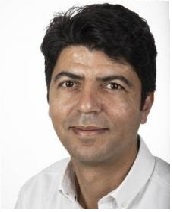
Adel Bouhoula (Arabian Gulf University, Bahrain) is a Full Professor of Computer Science with over thirty years of high-level academic and managerial experience at several world-renowned institutions. He has held numerous prominent positions, including Visiting Professor at the University of Tsukuba (Japan) for over a decade, Visiting Researcher at the Mitsubishi Research Institute (MRI, Tokyo, Japan), Visiting Researcher at SRI International (California, USA), and Visiting Professor at École Polytechnique (L’X, Paris, France). In addition, he served as a Senior Researcher at the French National Institute for Research in Digital Science and Technology (INRIA, Nancy, France), and as Chairman and CEO of the Research Institute for Computer Science and Telecommunication in Tunisia. Prof. Bouhoula owns three patents and has published over 200 articles in leading international journals, conferences, and refereed workshops. He has made significant contributions to prestigious A* conferences such as the International Joint Conference on Artificial Intelligence (IJCAI), Computer Aided Verification (CAV), and the ACM/IEEE Symposium on Logic in Computer Science (LICS). In addition, his research was published in numerous renowned journals, including Pattern Recognition, the Journal of Medical Systems and the ACM Transactions on Computational Logic. Prof. Bouhoula was invited to give seminars in renowned universities and laboratories worldwide, namely in France, the United Kingdom, Italy, Germany, Norway, Canada, China, the United States, and Japan. Moises Diaz (Universidad de Las Palmas de Gran Canaria, Spain) Moises Diaz received the M.Tech., M.Sc., and Ph.D. degrees in Engineering, and the M.Ed. degree in Secondary Education from the University of Las Palmas de Gran Canaria, Spain, in 2010, 2011, 2016, and 2013, respectively. He joined the Physics Department of the same university in May 2021, where he is currently an Associate Professor. He previously held Associate Professor positions at the Universidad del Atlántico Medio and the International University of La Rioja, Spain.
His current research interests include pattern recognition, document analysis, handwriting recognition, and biometrics. He serves as an Associate Editor for Pattern Recognition (Elsevier), is a regular reviewer for top-tier journals and leading international conferences, and has co-authored over 100 publications in international conferences and high-impact JCR journals, including 29 papers in Q1 journals.
Dr. Diaz has received Best Paper Awards at ICFHR 2014, ICDAR 2015, and ICCST 2023, as well as several research distinctions, such as the university’s awards for highest scientific output and young investigator recognition. He was also a finalist in the European Biometric Research and Industry Award, and has been granted the IAPR Research Scholarship and a COST Trainee Grant. He has held visiting research positions at the University of Hertfordshire (UK), the Brno (Czech Republic), the Universities of Salerno, Bari, and Parma (Italy), the University of Fribourg (Switzerland), ISI Kolkata (India), and École Polytechnique Montréal (Canada).
Elise Bishoff (PNN Laborotory, Richland, WA, USA) is a Data Scientist on the Applied AI Systems Team at Pacific Northwest National Laboratory. Her educational background includes a master’s degree in applied mathematics with an emphasis in data science from University of Washington and a bachelor’s degree in mathematics with a minor in computer science from Seattle Pacific University. Her work at PNNL has covered areas of safety and security of machine learning models, natural language processing, record linkage on big data, model production, deep learning, robustness of computer vision models, and developing data science workshop materials. Bishoff is also passionate about mentoring and helping others starting out their career in data science. She is a STEM ambassador and member of Seattle's Women in Data Science (Data Circles).
Islam Boussaada (Paris-Saclay university, France) is a Full Professor at IPSA, a leading French engineering school specializing in aeronautics and aerospace. He is also an associate researcher at the Laboratory of Signals and Systems (L2S) – Université Paris-Saclay, CNRS, CentraleSupélec – and with the DISCO team at Inria Saclay, where he was on research secondment from 2018 to 2020. |